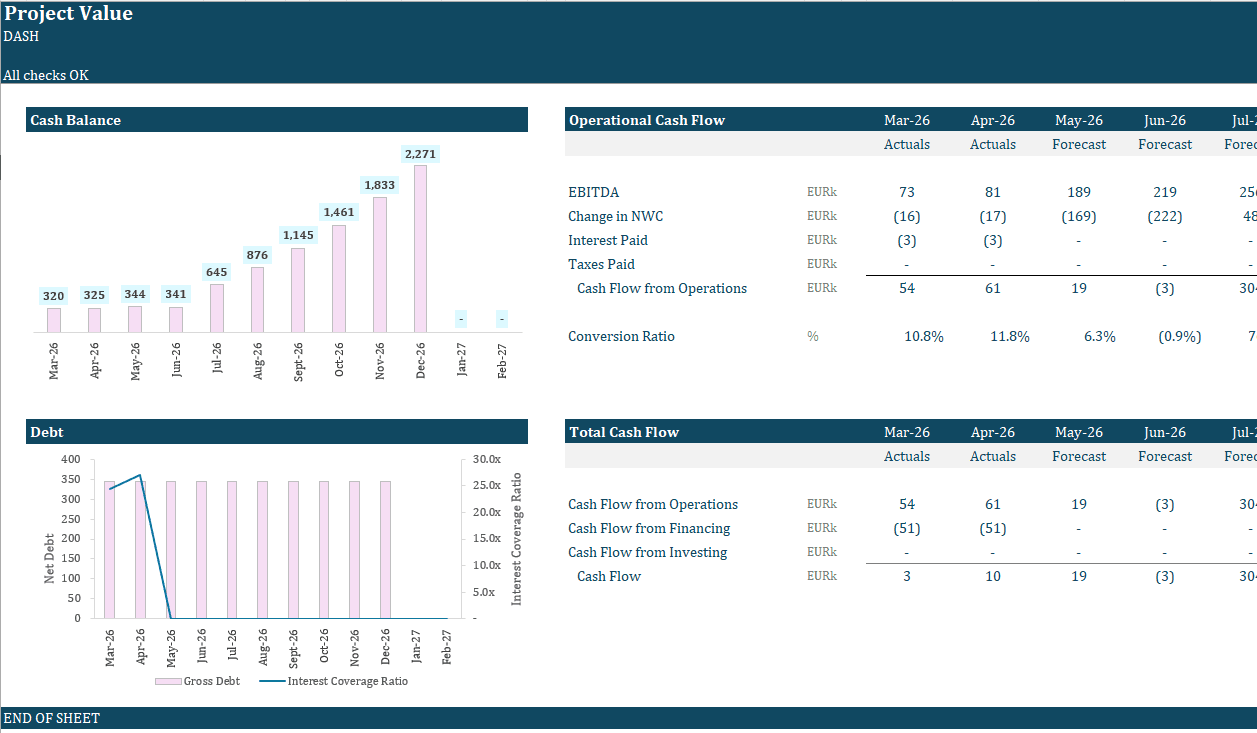
Why cash flow forecasts often fail
Many spreadsheets focus on revenue growth and profit, but not on timing. That is where cash flow risk usually appears. A business may grow, hire, and invest with confidence, then still hit pressure because customer payments arrive later than expected or costs rise before revenue catches up.
What a practical cash flow forecast should include
A useful cash flow forecast should go beyond top-line assumptions. It should reflect:
- Revenue timing and collection assumptions
- Gross margin and cost behavior as sales change
- Payroll, operating expenses, and one-off spend
- Working capital movements such as receivables, payables, and inventory
- Debt drawdowns, repayments, and interest costs
What this helps you decide
A stronger cash flow forecast helps you answer practical questions such as:
- Can we afford this hire next quarter?
- How much runway do we have if sales slow down?
- When do we need external financing?
- What happens if customers pay later than expected?
- How sensitive is the business to margin pressure or cost increases?